ServicesResident Income Verification
Resident Income Verification in Pembroke Pines
The Live Local Act tax exemption depends on proving that each set-aside unit is rented to a qualifying resident. We collect the income documents, test them against the current limits, and give you an organized file for every unit, with our scope and fee in writing first.
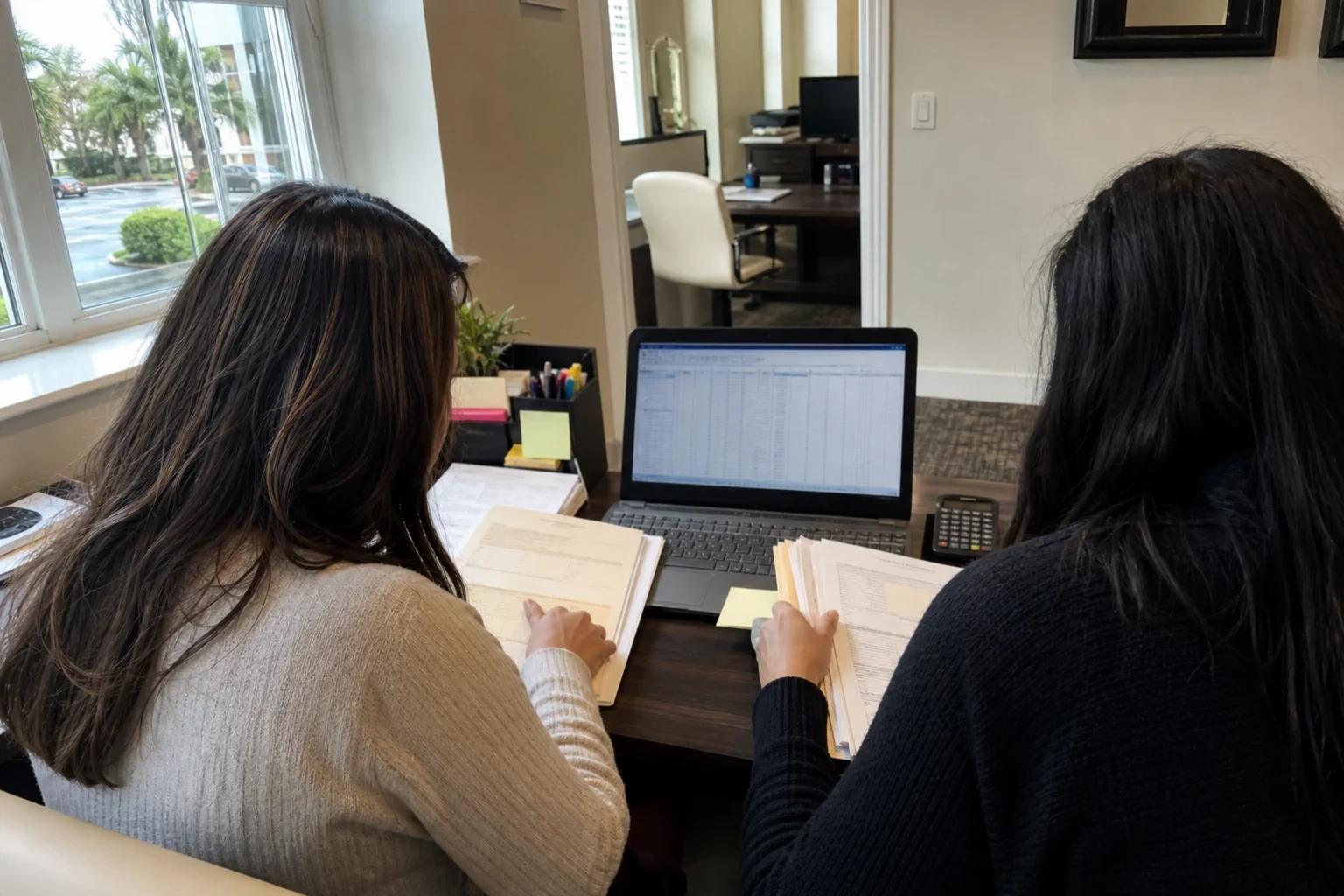
What income verification does for your exemption
Under the Live Local Act, the units you count toward the exemption have to be occupied by residents whose income falls within set limits, generally up to 80 percent or up to 120 percent of area median income. The exemption rate for each unit follows which tier it falls in. If a file is missing a pay stub or uses last year's limits, that unit can be questioned when the property appraiser or the Florida Housing Finance Corporation looks closer.
We do the document side of that work for you. Your leasing staff keep running the property. We gather what residents provide, check the math, flag gaps early, and hand back a file per unit that matches what you report on your FHFC certification and your county DR-504AFH filing.
What the work includes
A document checklist for residents
We give your office a plain list of what each resident needs to provide, such as pay stubs, benefit letters and a signed income statement. Clear requests mean fewer rounds of follow-up.
Income testing against current limits
We compare each resident's annualized income with the area median income limits for the year in question and the number of people in the unit. Limits change every year, so we confirm which table applies before testing anything.
Tier assignment by unit
Each qualifying unit is marked as 80 percent or 120 percent of median, since that drives how much of the unit's value can be exempted. You see the result unit by unit, not as a single total.
Rent checks alongside income
A resident can qualify on income while the unit's rent sits above the allowed limit. We check both so a unit isn't counted on half the requirements.
An organized file per unit
Every unit gets its own folder with the documents, the calculation and the tier result. That file supports your other filings and makes the next annual recertification much faster.

Signs your resident files need attention
- Files live in several places
- Some documents are in the leasing office, some in email, some in a shared drive. Scattered records are the first thing that slows down a filing.
- No one is sure which limits were used
- If income was tested against an older year's table, a unit that looked fine may no longer qualify, or one that was excluded may count.
- Your set-aside count is close to the minimum
- When the number of qualifying units is near the threshold, a single weak file matters. Those properties benefit most from a careful check.
- A filing deadline is coming up
- The FHFC and county filings both rely on accurate unit counts. Verifying income a few weeks before a deadline leaves time to collect what is missing.
How a verification project runs
- 1
A free review by phone
We talk through your property, the number of units you plan to count and where your records stand today. You get an honest read on what the work involves.
- 2
Written scope and fee
Before we start, you receive a written quote listing the units covered, what we need from you and what the fee includes. If something changes, we tell you in writing before doing extra work.
- 3
Collection and testing
We work with your leasing staff by phone, video and shared files to gather documents, then test income, family size and rent for each unit. Gaps go back to you on a short list, unit by unit.
- 4
Hand-off and walkthrough
We hand over a folder for every unit along with a short overview of which residents meet the limits and the tier each unit lands in. Then we go through it together on a call, so your team can answer questions about any unit with confidence.
What affects the cost
Our fee depends mainly on how many units we verify and how ready your records are. We explain every factor in the written quote before work begins. There are no add-ons you hear about afterward.
- Number of units
- A property counting the minimum set-aside takes less time than one verifying every affordable unit across several buildings.
- Condition of existing records
- Complete, current files mostly need testing. Missing or outdated documents mean more collection and follow-up.
- Income complexity
- Wages from one employer are quick to annualize. Self-employment, several jobs or irregular benefits take more care to calculate correctly.
- Timeline
- Work that has to land right before an FHFC or county deadline may need more hours in a short window, which we price openly in the quote.
Resident income verification questions
- Do my residents have to meet with you?
- Usually not. Most of the work runs through your leasing office and shared documents. If a resident's situation is unusual, we can talk with your staff by phone or video about what to request.
- Which income limits do you use?
- We use the published area median income limits for Broward County that apply to the tax year you are filing for, adjusted for the number of people in the unit. We note the table used in each file so anyone reviewing it can follow the math.
- What happens if a resident no longer qualifies?
- We flag the unit and explain why, whether it is income, family size or rent. You decide how to handle it, and we can help you see whether another unit could be counted in its place.
- Does this replace annual recertification?
- No, but it sets it up. Recertification repeats the check each year, and the files we build make that work quicker. Our Annual Recertification service covers that ongoing step.
- Is the first conversation really free?
- Yes. The Live Local review and the eligibility check by phone cost nothing. If you decide to go ahead, the fee is in your written quote before anything starts.

Get your unit files in order before the next deadline
Share a little about your property and how your resident records look today. We will walk you through what verification covers, and if you want to go ahead, you get a written quote before any work starts.